Why Brands Aren't Responding to Your Pitches (And How to Fix It)

Paul Osas
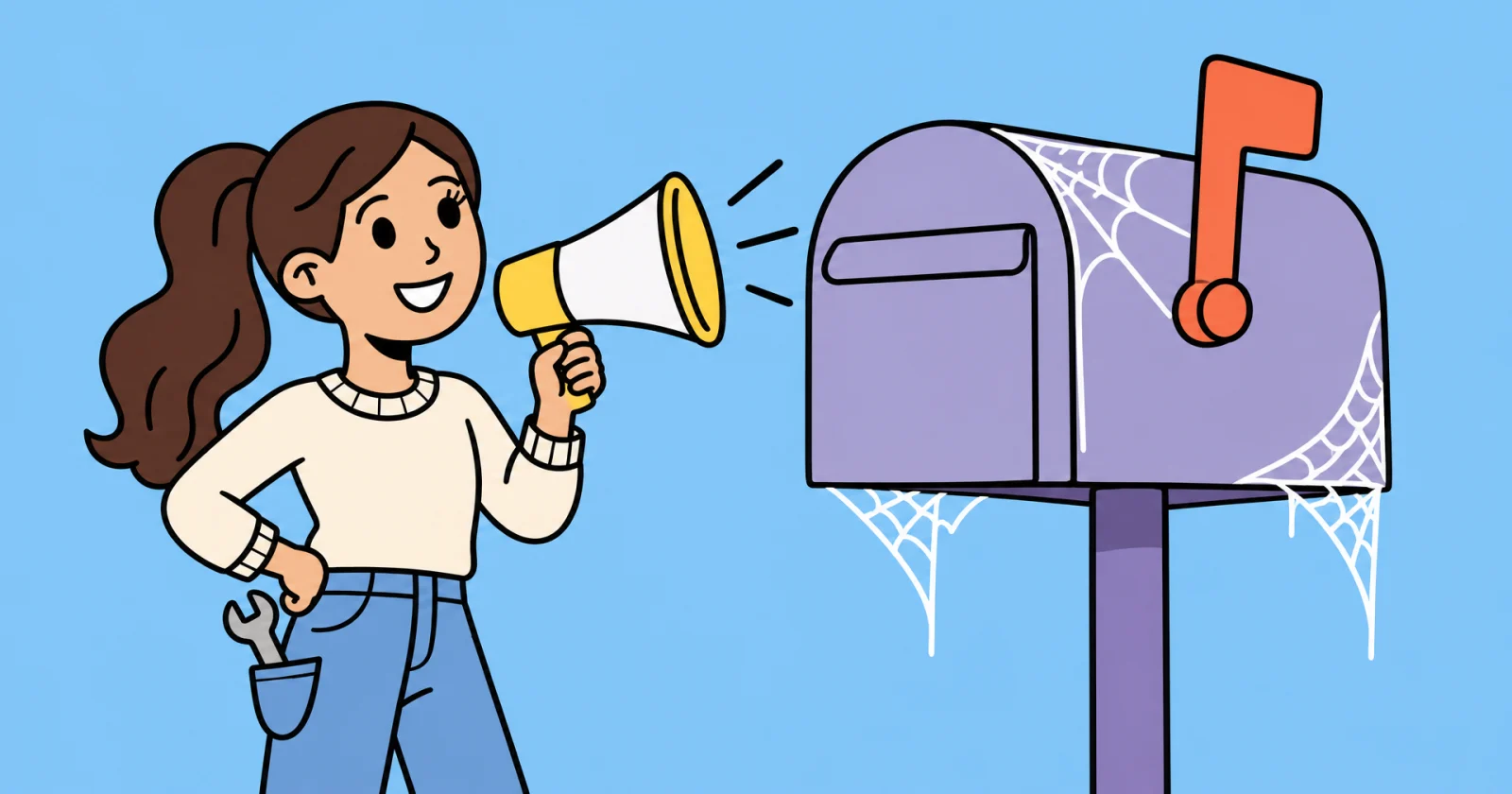
You spent hours researching your dream brand. You tweaked your portfolio, filmed a high-converting hook, carefully drafted a personalized outreach email, and hit "Send."
Then, you waited. Days passed, and nothing happened. No reply, no "thanks, but no thanks," just complete, deafening silence.
If that sounds familiar, you're not doing anything unusually wrong. You're just missing a few things that separate ignored pitches from answered ones.
Silence is the default response to most cold outreach.
Brand marketing inboxes get hundreds of pitches a week from creators, agencies, and PR firms.
But some creators consistently land replies while others send into the void. The difference comes down to a handful of fixable problems.
This post breaks down exactly why brands go quiet, what you can control, and what to do instead.
Key takeaways:
- Most ignored pitches fail on timing, targeting, or positioning
- Emailing the wrong person is one of the most common (and invisible) reasons pitches disappear
- Generic, credential-heavy pitches lose to short, specific ones that lead with value
- A "no reply" today doesn't mean "no" forever — follow-ups recover a large share of deals
- Volume without strategy just produces more silence, faster
Reason 1: Check If Your Email Even Reached the Inbox
Before worrying about your pitch copy, you have to answer one fundamental question: Did a human being actually see your message?
If your deliverability is broken, your pitch could be a masterpiece, but it won't matter because it went straight to the spam folder.
Email service providers like Gmail and Outlook use aggressive filters to combat automated junk.
According to deliverability data from Instantly, sending more than 30 to 50 cold emails per day per mailbox mimics bot behavior and triggers automated spam filters.
Pitching from a free @gmail.com address or including heavy attachments (like a 20MB PDF media kit) flags your message instantly.
So how do you do it?
Ditch large attachments: Never attach raw video files or massive PDF portfolios to a cold pitch. Always link directly to an external portfolio or website.
Avoid spam-trigger words: Scrub your copy of generic phrases like "collab opportunity," "work for free," or all-caps hooks.
Set up proper domain authentication: If you send pitches from a custom domain, ensure your SPF, DKIM, and DMARC records are configured to verify sender authenticity.
Deliverability is the foundation of outreach. Fix your technical setup first, and you instantly bypass half the creator crowd stuck in spam.

Reason 2: You're Pitching the Wrong Person
Another reason your pitches vanish is bcause they land in front of someone who has zero power to say yes.
Or if you send your pitch to a generic info@, a customer support address, or a social media coordinator with no partnership authority, that email is dead on arrival.
Photographer educator Olivia Bossert lists this as the top reason pitches don't get replies, and it lines up with what most experienced creators learn the hard way.
Generic company inboxes are managed by customer support teams or automated routing bots. Their job is to resolve return requests, handle shipping delays, and flag broken orders.
When your pitch lands in a support queue, the representative will archive it without a second thought.
To get a response, you need to reach the specific decision-maker who owns creator budgets.
If you don't know where to look, check out our complete breakdown on how to find influencer marketing managers. When you put your offer in front of the actual budget-holder, your response rate jumps immediately
This is exactly the problem tools like PitchBrand's verified email finder exist to solve.
If you're building your contact list manually, this guide to finding brand contacts covers the basics of tracking down real people instead of generic addresses.
Reason 3: Your Subject Lines Trigger the Swipe-Away
Your subject line has one solitary job: to get the email opened.
According to email marketing benchmarks from Mailchimp, the majority of business emails are read on mobile devices.
If your subject line exceeds 40 to 50 characters, the preview cuts off.
If your subject line reads:
❌ “UGC Collaboration Inquiry / Paid Creator Opportunity
The brand manager swipes left. It sounds like an unpaid administrative chore.
Instead, use concise, curiosity-inducing hooks that lead with relevance:
✅ “Quick concept for [Product Name] ads”
✅ “Loved the recent [Campaign Name] launch (+ an idea)”
✅ “Two scroll-stopping angles for [Brand]
Keep your title under 7 words. If you want to dive deeper into testing hooks that drive opens, browse our guide on subject lines that get brand deals opened.
Reason 4: You Still Have the "Me, Me, Me" Syndrome
Why do marketing managers delete pitches even after opening them?
Because the pitch reads like an autobiography.
Consider this common creator email:
"Hi! My name is Sarah, and I am a lifestyle creator with 15,000 followers on TikTok. I really love your products and I'm looking to partner with brands to grow my portfolio this month. Let me know if you can send me free products in exchange for a post!
This pitch is entirely focused on what Sarah wants. It offers zero business value to the brand.
Brands do not buy content because you want to be a creator; they buy content because they have business goals to hit. They need to lower their customer acquisition costs (CPA), scale their paid ad campaigns, or reach a hyper-specific demographic.
Use the 20% Personalization Rule: keep 80% of your core pitch structured, but rewrite the first 20% specifically for the brand.
Point out a creative gap in their current social ads, pitch a specific angle, and illustrate how your content will drive clicks.
If you are struggling to write value-driven copy, stop reinventing the wheel and swipe our proven UGC pitch templates.

Reason 5: You Have Broken Portfolio Links and Social Proof
When a marketing manager opens your pitch and likes your angle, their immediate next step is to evaluate your proof of work.
If your portfolio link requires a Google Drive access request, points to a broken page, or opens an unorganized social profile, you lose the deal instantly.
A winning creator pitch provides frictionless social proof:
- Host your work on a fast-loading, clean website rather than a messy cloud folder.
- Highlight two to three direct-response video concepts tailored to the brand's niche (e.g., problem/solution, testimonials, unboxings).
- Include concise metrics showing engagement or click-through rates from previous brand collaborations.
Don't have a clean home for your work yet? Review our collection of the best free UGC portfolio website builders to build a mobile-ready portfolio in an afternoon
Reason 6: You’ve Not Mastered the Art of the Follow-Up
Here is an eye-opening statistic: sales research from Yesware shows that over 70% of unanswered email chains stop after just one attempt.
Yet, industry data demonstrates that sending polite follow-ups can lift total response rates by up to 50%.
Marketing managers are humans managing packed inboxes, client meetings, and internal deadlines. A lack of reply on Day 1 rarely means "no"—it often just means your email was buried under 50 other messages.
To systematically close deals without seeming annoying, use this 3-touch cadence:
Touch 1 (Day 0): Send your initial, hyper-personalized pitch.
Touch 2 (Day 5–7): Send a polite bump on the same thread. Add a fresh content angle or highlight a recent campaign result to provide new value.
Touch 3 (Day 12–14): Send a professional close-out note. Simply mention that you understand priorities may be booked for the quarter, and you will close the loop for now.
For step-by-step scripts on how to execute this without feeling awkward, read our complete guide on how to follow up after pitching a brand.
Reason 7: You're Pitching Brands That Don't Need You Right Now
Sometimes the pitch is fine, and the person is right but the timing just isn't.
A skincare brand mid-way through a locked campaign calendar isn't going to reroute budget for your pitch, no matter how good it is.
A brand that just launched a big influencer campaign last month probably isn't looking for more creators this week.
You can't always know a brand's internal calendar. But you can improve your odds by watching for signals: recent product launches, a new campaign hashtag, hiring posts for "influencer marketing manager," or brands publicly asking for UGC submissions.
These are moments when budget and appetite are actually open.
Volume matters too, but not the way most creators think. Sending more pitches isn't the fix if the pitches themselves are generic.
The better approach is a sustainable, targeted cadence.
Our guide on how many brands to pitch per week lays out the actual numbers that produce consistent replies without torching your list.
For a sense of what's normal across the industry right now, PitchBrand's state of pitching 2026 data is worth a look.
Pitch Comparison Cheat Sheet
Use this reference table to audit your outreach before you hit send:
Outreach Element | ❌ What Gets You Ignored | ✅ What Gets a Response |
Recipient Inbox | Generic addresses ( | Verified Influencer Marketing Manager emails |
Subject Line | "Collaboration Opportunity with Creator" | "Concept for [Product] + quick TikTok idea" |
Email Body | Life stories, follower counts, and asking for free gifts | Clear value proposition, specific hooks, and commercial solutions |
Portfolio Format | Huge PDF attachments or locked Google Drive links | Clean, direct web link to relevant niche samples |
Follow-Up Strategy | Giving up after one email, or sending daily "did you see this?" pings | A structured 3-touch sequence spaced over two weeks |
Take Control of Your Pipeline
If brands aren't responding to your pitches right now, remember: outreach is a refined skill, not a gamble.
By auditing your sender reputation, reaching verified decision-makers, and swapping generic pitches for direct commercial solutions, you immediately move your emails to the top of the pile.
Review your last 10 sent emails against the steps above. Fix your subject line, sharpen your offer, set up your follow-up tracker, and start building consistent brand partnerships today. You’ve got this.