What is Tech UGC? (The Complete High-Paying Creator Guide)

Paul Osas
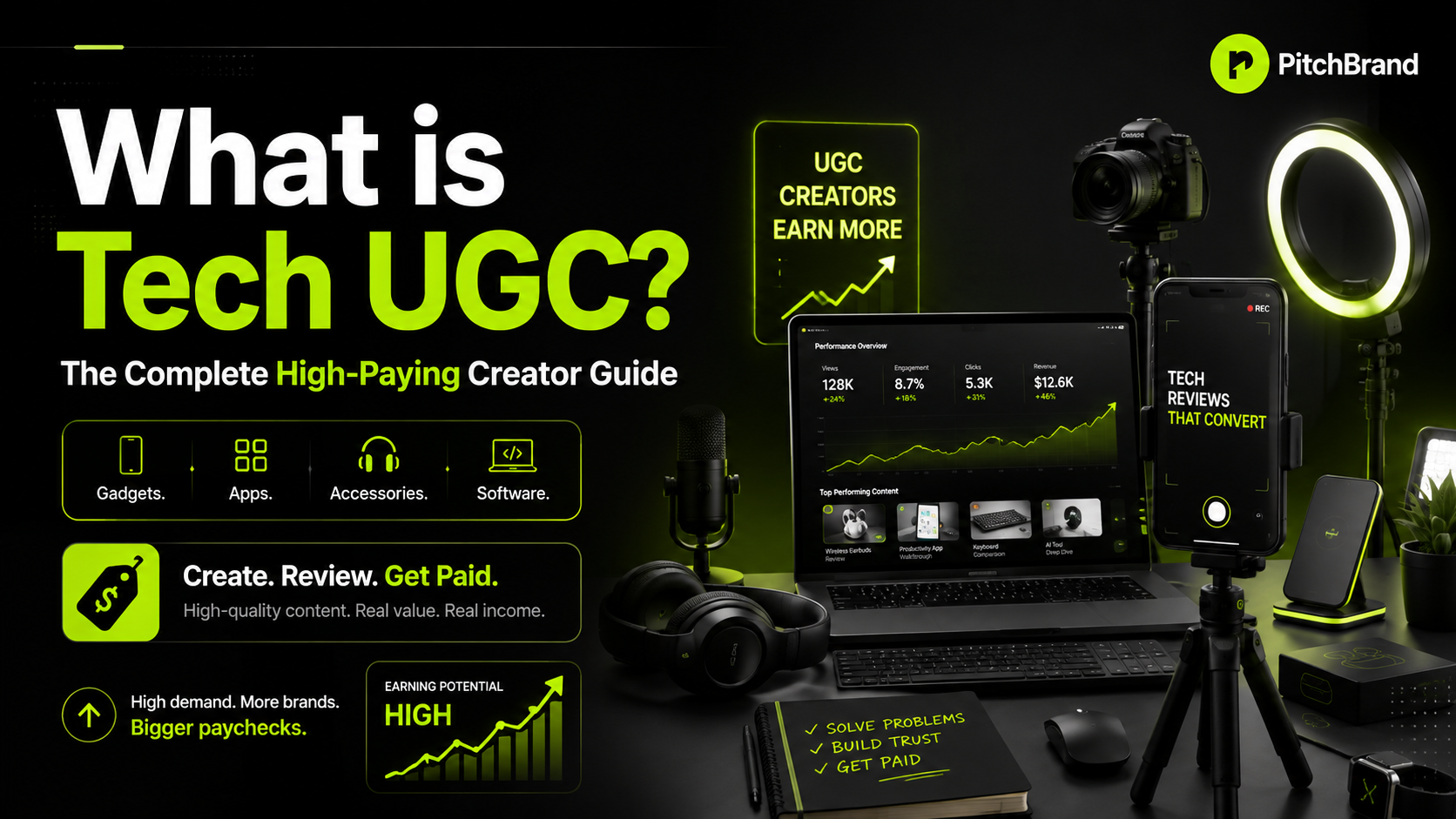
Scroll through TikTok or Instagram, and 90% of the creator advice you see is about skincare serums, workout leggings, and unboxing makeup boxes.
If you are a gadget enthusiast, software nerd, or productivity lover, you might be left wondering: Where are all the tech brands?
Skincare and snack brands aren't the only ones paying creators to make short videos anymore.
Software companies, AI startups, and app developers have quietly built one of the fastest-growing corners of the creator economy.
While other creators are making $200 on a lipstick review, SaaS (Software-as-a-Service) creators are quietly landing $2,000 deals for a single screen recording.
It's called tech UGC, and it pays surprisingly well for content that doesn't require a single physical product, a ring light setup, or a filming location.
Tech UGC is one of the fastest-growing and highest-paying sectors in digital marketing. You don't need a computer science degree or a massive follower count to break in. You just need to know how to demonstrate digital value.
This guide breaks down exactly what tech UGC is, how it's different from traditional UGC, what these videos actually look like, and how to start landing your first tech brand deal.
Key takeaways:
- Tech UGC is creator-made video content that shows off apps, software, AI tools, and gadgets — not physical unboxings
- Most tech UGC videos are short-form (6-30 seconds), screen-recorded or filmed, and demonstrate a product solving a real problem
- Pay ranges from $100 to $1,000+ per video depending on usage rights, brand size, and creator experience
- You don't need a huge following — brands care more about your content style and ability to make software look natural on camera
- Getting started requires a portfolio, a pitch strategy, and a way to find the right decision-makers at tech companies
What is tech UGC?
First off, user-generated content (UGC) is authentic, creator-led media produced for brands to use in their marketing campaigns and paid ads.
Tech UGC is user-generated content made by creators to show how a software product, app, or piece of technology works in real life.
Instead of reviewing skincare or unboxing a package, you're demonstrating an app interface, narrating a workflow, or reacting to an AI tool solving a problem.
Unlike lifestyle UGC, which focuses on sensory aesthetics, swatches, and unboxing packaging, tech UGC focuses on utility, efficiency, problem-solving, and workflow transformations.
Think of it this way: if a skincare brand wants a 15-second video of you applying serum and talking about your skin texture, a SaaS brand wants a 15-second video of you opening their app, tapping through a feature, and explaining why it made your life easier. Same format, completely different subject.
How is tech UGC different from regular UGC?
Tech UGC skips the physical product entirely and focuses on software, apps, or digital tools instead.
There's no shipping, no unboxing shot, and no in-person filming required because many tech UGC creators record their entire video using just a screen recording and their phone's front camera.
Here's a side-by-side comparison to make it clearer:
Traditional UGC | Tech UGC |
|---|---|
Physical product (skincare, food, apparel) | Digital product (app, software, AI tool) |
Requires unboxing or product-in-hand shots | Requires screen recordings or app walkthroughs |
Product shipped to creator | Creator gets app access or free trial |
Filming location matters (kitchen, bathroom, etc.) | Filming location rarely matters |
Common niches: beauty, food, home goods | Common niches: SaaS, mobile apps, AI tools, fintech |
Why Tech UGC Commands Premium Rates
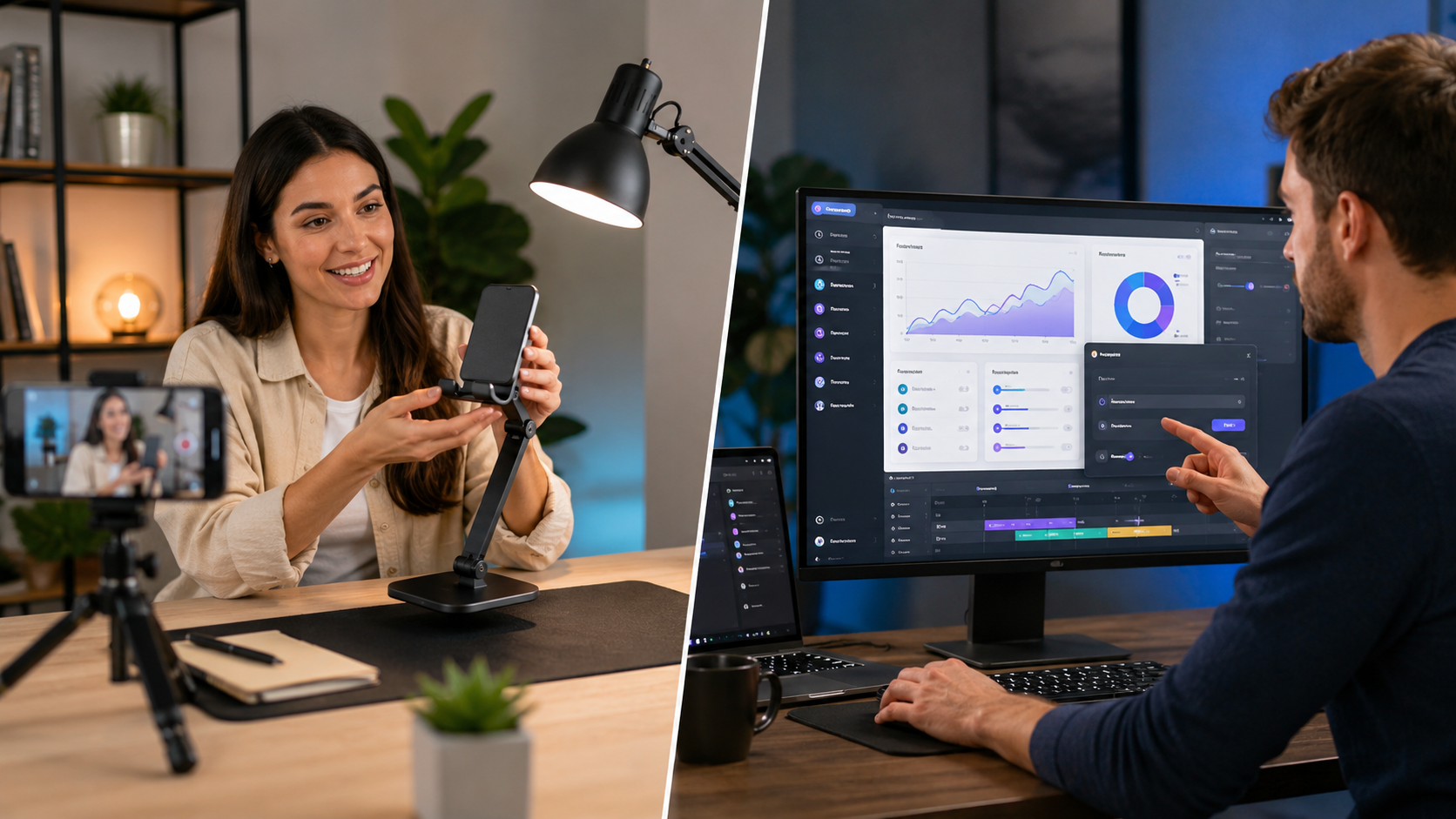
If you examine market averages across the creator economy, the difference in earning potential is massive.
While beauty and fashion creators often average $200 to $500 per video, tech and SaaS UGC creators routinely charge $800 to $3,000+ per asset.
Industry Niche | Average Base Rate Per Video | High-Demand Verticals |
SaaS & Technology | $800 – $3,000 | AI automation tools, B2B software, cybersecurity |
Beauty & Skincare | $500 – $2,000 | Clean skincare, anti-aging routines |
Fashion & Apparel | $400 – $1,500 | Sustainable fashion, luxury accessories |
Health & Wellness | $300 – $1,200 | Daily supplements, fitness trackers |
Why are software and tech companies willing to pay so much more?
It comes down to Customer Lifetime Value (LTV).
When a beauty brand sells a $15 moisturizer, their profit margin on that single transaction is small. But when a SaaS company signs up a customer for a $50/month project management subscription, that customer might stay for three years, generating $1,800 in recurring revenue.
Because the financial return for the software brand is so high, their customer acquisition budgets are massive. They gladly pay top dollar for creators who can translate complicated technical software into engaging, digestible ads that drive trial sign-ups.
To see how to structure your rates for these higher-tier deliverables, review our comprehensive guide on how to price UGC content.
The 4 Core Formats of High-Converting Tech UGC
Tech marketing managers are looking for specific storytelling frameworks that convert passive viewers into active software users or hardware buyers.
Here are the four highest-performing tech UGC formats you can create:
1. The "Problem / Solution" Screen Walkthrough
This is the holy grail of software UGC. You start with a common frustration, show how long it takes using traditional methods, and then reveal the app interface solving that exact problem in seconds.
Hook: "Stop manually cleaning your audio files in Premiere. Here's how to fix background noise in 1 click."
Visual: Split screen showing the messy raw audio track vs. the AI software cleaning it with a toggle switch.
2. The "Day in the Life" Workflow Integration
Rather than pitching a hard sales message, you integrate the gadget or software seamlessly into a daily routine.
Hook: "Everything I use in my 6:00 AM desk routine as a remote software engineer."
Visual: Fast-paced b-roll showing an ergonomic desk mat, a productivity timer app, and a dual-monitor stand.
3. The Direct Comparison (Old Way vs. New Way)
Viewers love comparative visuals. You contrast a clunky, expensive process with a sleek digital alternative.
Hook: "You don't need a $2,000 design agency to build landing pages anymore."
Visual: Side-by-side comparison of a complex code terminal vs. a drag-and-drop no-code app builder.
4. The Hardware Feature Deep-Dive (ASMR & Tactile B-Roll)
For physical electronics, buyers want to hear the sounds, see the textures, and appreciate build quality.
Hook: "Is this $80 mechanical keyboard actually worth the hype?"
Visual: Close-up macro shots, crisp audio of typing sounds (ASMR), lighting customization demos, and port connectivity tests.
How do you get into tech UGC?
Creating tech UGC doesn't require Hollywood gear, but your presentation must look crisp, clean, and modern. Technology brands value clear visuals and pristine audio above all else.
Here is what you need in your setup:
Clean Screen Recording Software: Use tools like OBS Studio, QuickTime, or Loom to record lossless, 60fps screen captures without lag or low-resolution compression.
Studio-Quality Audio: Viewers will forgive mediocre lighting, but bad audio will ruin a tech review. Invest in a reliable USB or wireless lavalier microphone (such as a DJI Mic or Rode VideoMic) to capture crisp voiceovers.
Video Editing Software: Use apps like CapCut, Adobe Premiere Rush, or Descript to quickly cut dead air, zoom in on software buttons, and generate dynamic subtitles. If you want to explore more options, browse our list of the best apps for content creators.
AI Scripting Assistants: When you need help breaking down complex SaaS documentation into punchy 30-second scripts, leverage LLMs to outline your hooks. Learn how to streamline your workflow with the best AI tools for UGC creators.
How to Build a Tech UGC Portfolio (From Scratch)
You don’t need an active roster of paid clients to build an impressive tech portfolio. You can create speculative (spec) samples using the tools and hardware already in your workspace.
So how do you do it?
1. Pick 3 Tools You Use Daily: Choose one hardware product (like your wireless mouse), one mobile app (like a habit tracker), and one desktop SaaS platform (like Notion or Canva)
2. Storyboard Your Concepts: Write a 2-column script detailing what the camera shows on the left and what the voiceover says on the right. If you need a framework, read how to storyboard UGC videos
3. Film Crisp Samples: Record 15-to-30-second videos demonstrating one core feature per video
4. Publish to a Dedicated Builder: Host your video embeds on a clean, responsive page. Check out the best free UGC portfolio website builders to build your site in minutes
Make sure your bio clearly communicates your niche. Instead of calling yourself a "General Creator," state: "Tech & SaaS UGC Creator helping software brands drive sign-ups through conversion-focused video assets". (See more inspiration in our guide on 15 UGC creator bio examples
Pitching Tech and SaaS Decision-Makers
One of the biggest brand deal outreach mistakes creators make is pitching generic support inboxes or sending casual Instagram DMs. Tech companies operate professionally via email and LinkedIn
Who to Contact
When researching software companies, bypass traditional PR agencies and target these internal roles:
- Head of Growth / Growth Marketing Manager
- Performance Marketing Lead
- Product Marketing Manager (PMM)
- Head of Content / Social Media Manager
If you need a systematic method to locate direct contact info, follow our guide on how to find brand emails for UGC.
The SaaS-Specific Pitch Formula
Keep your pitch direct, metrics-focused, and concise. Speak the language of performance marketing (Cost Per Acquisition, click-through rates, and conversion hooks)
Subject: UGC concept for [App Name]’s onboarding flow
Hi [Manager's First Name],
I’ve been using [Product Name] to manage my [specific task], and the recent update to [Specific Feature] is incredible.
I’m a tech UGC creator specializing in direct-response video assets for SaaS brands. I noticed your team is actively scaling paid ads across TikTok and Meta.
I storyboarded two 20-second concepts showing how [Product Name] cuts [common user frustration] in half, designed specifically to lower trial acquisition costs.
Would you be open to checking out a quick 15-second draft sample I put together?
Best,
[Your Name]
[Link to Tech Portfolio]
To access more plug-and-play outreach scripts, check out our proven UGC pitch templates.
Licensing and Contracts in the Tech Space
Because tech companies run heavy paid advertising campaigns across YouTube, TikTok, Meta, and Google, usage rights are non-negotiable.
Never sell raw creation rights without factoring in paid ad licensing.
Use the standard licensing formula:
$$\text{Total Fee} = \text{Base Creation Rate} + (\text{Base Rate} \times \text{Monthly Usage \%} \times \text{Duration in Months})$$
Base Rate: $800
Paid Media License: 30% per month
3-Month Ad Campaign: $800 + ($800 \times 0.30 \times 3) = \mathbf{\$1,520}$
For an in-depth breakdown of these clauses, read our UGC usage rights pricing and licensing guide.
Before you record a single frame, ensure both parties sign a simple UGC creator contract template to lock in delivery deadlines, payment terms, and usage bounds.
Once a brand sees positive conversion from your first video, pitch them on ongoing asset bundles using our strategies on how to scale from 1-off UGC gigs to monthly retainers.
Claim Your Space in the Tech Niche
Tech UGC removes the ceiling from your creator income. You don't need a viral lifestyle aesthetic to build a thriving business; you simply need to bridge the gap between complex software and real everyday users.
Audit the apps and gadgets you already rely on daily. Script your first problem-solution walkthrough. Build a focused tech portfolio, and start pitching growth teams who have active budgets ready to spend.
Want to skip the hours of manual LinkedIn searching and connect directly with marketing leads at top tech companies? Head over to PitchBrand to access our verified database of brand decision-makers, track your outreach, and start landing paid tech partnerships today.