What Is Canvas UGC? The Complete Guide for Creators

Paul Osas
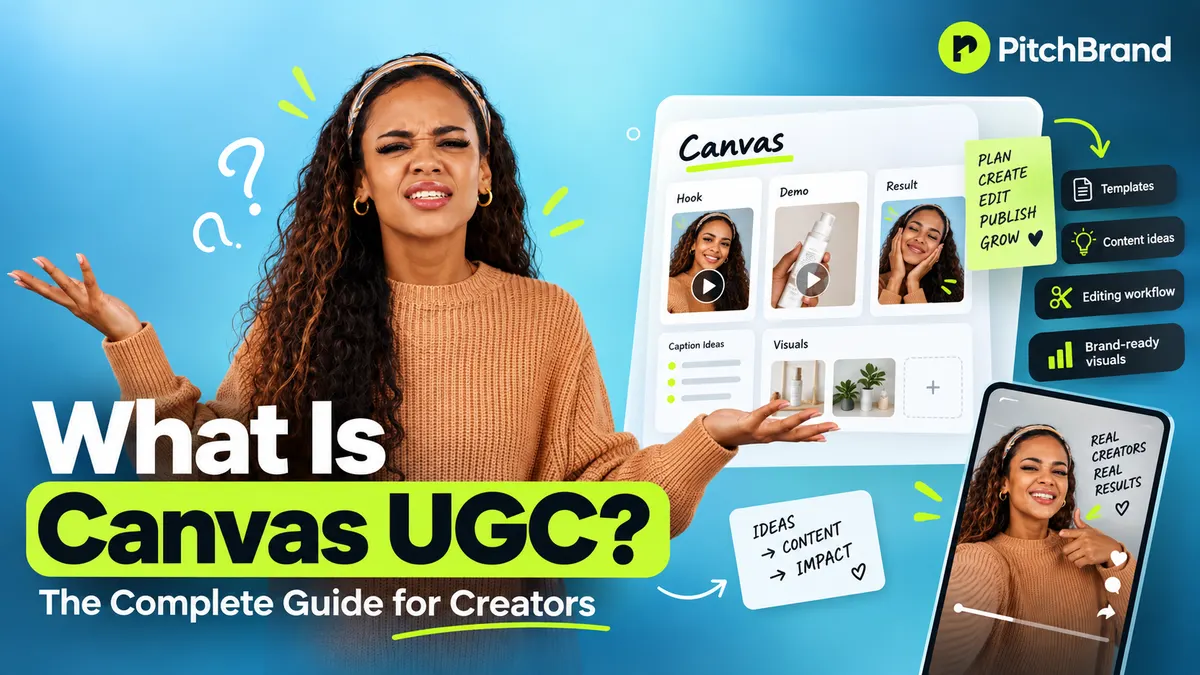
Scroll through TikTok UGC creator content long enough, and you'll hit a term that didn't exist two years ago: canvas UGC.
Search interest is climbing fast, with about 1,000 people a month now Googling "what is canvas ugc," trying to figure out if it's a real income stream, a scam, or just influencer marketing wearing a new outfit.
It's real!
And it's already changing how brands and creators work together. But it also comes with risks that most of the hype videos conveniently skip over.
This guide breaks down exactly what canvas UGC is, how it differs from traditional UGC, what it pays, and the legal and platform risks you need to know before you take a gig.
We'll also cover where it fits if you're a creator building a real pitching business or just chasing whatever's trending this month.
Key takeaways:
- Canvas UGC means running a brand-new, brand-dedicated social account instead of posting on yours
- It's different from traditional UGC, where you create content but the brand posts it (or repurposes it) on their own channels
- Pay varies widely per-video or monthly retainers, but there's less standardization than traditional UGC rates
- It raises real disclosure and platform-policy questions, since the content looks organic but is fully brand-directed
- It shouldn't replace a diversified outreach strategy — treat it as one revenue stream among several
What is canvas UGC?
Canvas UGC is a content model where a creator builds and runs a brand new, unbranded social media account created specifically for one brand instead of posting on their own personal page.
The creator becomes the "canvas": their face, voice, and daily life become the content vehicle, while the brand owns the account itself. Unlike a typical influencer deal, the account starts from zero, disguised as an authentic everyday account, and gets built up specifically to sell one brand's product.
The term picked up steam on TikTok throughout 2026, and it's still fuzzy enough that a lot of creators are confused about whether canvas ugc is even a distinct category.
How does canvas UGC Work?
In practice, a brand hires a creator to set up (or take over an existing dormant) social account, gives them a niche and posting cadence, and pays them to film and post daily content that looks personal but is entirely built around promoting the brand's product.
The account itself belongs to the brand, not the creator.
Here's what the typical workflow looks like:
1. The brand recruits a creator, often through an agency or direct outreach, to "run" a fresh account
2. The creator picks (or is assigned) a niche (skincare, fitness, home organization, parenting) that fits the product naturally
3. They post daily or near-daily, mixing lifestyle-style content with product mentions to build the illusion of an organic account
4. Once the account gains traction, product placement ramps up — sometimes subtly, sometimes as full "get ready with me" style promos
5. The brand pays the creator per video, per month, or based on performance milestones
This is the core distinction people search for when they type "canvas ugc vs canva" — no, it has nothing to do with the design tool Canva.
It's about the account being a blank canvas the brand paints its story onto.

Canvas UGC vs Traditional UGC: What's the Difference?
Traditional UGC means a creator films content on their own account or as a standalone asset, then hands it to the brand to use in ads, on their website, or on their own social channels.
Canvas UGC skips that handoff, and the creator posts directly to a brand-owned account that's built to look like a real person's page.
Here's a side-by-side breakdown:
Factor | Traditional UGC | Canvas UGC |
|---|---|---|
Who owns the account | The creator | The brand |
Where content is posted | Creator's own page, or handed off as raw footage | A dedicated, often unbranded account |
Content frequency | Per-deliverable (a few videos per campaign) | Daily or near-daily posting |
Disclosure clarity | Usually clear brand tags or hashtags | Often deliberately vague or absent |
Creator's long-term asset | Builds their own portfolio and following | Builds the brand's asset, not the creator's |
Payment structure | Per video/deliverable, standard usage rights | Often retainer-based, less standardized |
How much does Canvas UGC pay?
Canvas UGC pay varies far more than standard UGC rates because there's no established industry benchmark yet.
Some creators report flat monthly retainers for running an account daily, others get paid per video, and some deals include performance bonuses tied to follower growth or engagement.
Because the model is so new, there isn't reliable third-party data on average rates the way there is for standard UGC rates in 2026.
What's clear from creator discussions on Reddit and Instagram is that pay structures range widely. Some agencies pay per post, others pay a flat monthly fee regardless of output, and top performers with proven account growth can negotiate revenue-share or bonus structures.
A few pricing structures you'll commonly see mentioned by creators doing this work:
- Per-video rate: Similar to standard UGC, but often lower since volume is higher
- Monthly retainer: A flat fee for daily posting over 30 days, regardless of performance
- Performance bonuses: Extra pay tied to follower count, views, or sales attributed to the account
- Hybrid deals: Base retainer plus bonuses once the account crosses growth milestones
Whatever the structure, always get it in writing before you start filming daily content for an account you don't own.
Red flags in brand contracts apply just as much here, maybe more, since you're handing over your face and voice to something the brand controls entirely.
Is canvas UGC legit, or is it a scam?
Canvas UGC is a legitimate and growing paid content model, but it operates in a gray area around disclosure rules and platform policies that creators should understand before signing on.
The legitimacy depends entirely on the specific brand, contract terms, and whether proper sponsored content disclosure happens.
Before taking a canvas UGC gig, ask yourself:
Does the contract require FTC-compliant disclosure (like #ad or #sponsored) on posts?
Who owns the account if the brand relationship ends?
Is there a non-compete clause preventing you from doing similar work for competitors?
What happens to your likeness and footage after the contract ends?
Is the pay structure and schedule clearly defined in writing?
What are the risks of running a canvas account?
The biggest risks of canvas UGC are disclosure violations, loss of control over your image, and zero long-term ownership of the audience you build. You're putting in daily work to grow something you can't take with you.
Break it down further:
Disclosure and platform policy risk
Because Canvas accounts are designed to look organic, they blur the line on required ad disclosures.
If platforms crack down, accounts built this way could face restrictions, and creators tied to that account's reputation take the hit too.
No ownership, no portfolio
Every video you post lives on an account you don't own. If the brand relationship ends, you walk away with nothing to show. No growing follower base, no page to point future clients to.
Compare that to traditional UGC, where every deliverable becomes part of your reusable content portfolio that you can repurpose across your own channels and pitch decks.
Likeness and usage rights
You're on camera daily for someone else's account. Read the fine print on how long they can use your face.
Can they keep the account running with your content after you leave? You have to understand whitelisting and ad usage rights to make the most of these deals.

Should you try canvas UGC, or stick with traditional pitching?
Canvas UGC is a solid supplementary income stream, but it shouldn't replace building your own outreach pipeline and personal brand.
The accounts you grow for brands aren't yours, and the relationships, portfolio, and reputation you build through direct pitching are.
Think of it this way:
Canvas UGC pays for daily labor on someone else's asset. Traditional pitching and UGC deals build equity in your own career because every email you send, every relationship with a decision-maker, every piece of content becomes part of something that compounds.
Most creators doing well long-term run both, but they don't let canvas gigs crowd out the outreach work that builds their name.
How do you get started with canvas UGC if you want to try it?
To get started with canvas UGC, look for agencies or brands openly advertising "canvas UGC" or "ambassador account" roles, vet the contract carefully for disclosure and ownership terms, and choose a niche you can realistically sustain daily content for.
A practical starting checklist:
1. Search for agencies specializing in this model, like those advertising canvas UGC creator roles on job boards and Instagram
2. Read every contract clause on account ownership, disclosure requirements, and exit terms
3. Pick a niche that matches products you'd actually use and can talk about convincingly every day
4. Set a sustainable posting cadence
5. Keep documentation of your work and pay, in case disputes come up over account ownership or compensation
And if you decide it's not for you, that's a completely valid call.
A lot of experienced creators skip canvas UGC entirely and focus on direct brand pitching because it builds something they keep long after the contract ends.