Top 10 Creator Outreach Tools for Campaign Success

Paul Osas
17 min read

Let's talk about the uncomfortable math of brand pitching.
The average cold outreach email to a brand gets a response rate somewhere between 5% and 15%. That means for every 100 emails you send, you're getting 5 to 15 replies, and not all of those convert into paid deals.
If you're sending pitches manually by hunting down contacts one by one, copying and pasting templates, following up from memory, you're not running a business.
You're doing data entry. How do you smart creators do it?
Creator outreach tools
The right tool creates a repeatable, trackable system out of something that currently feels like throwing darts in the dark.
In this guide, we're going to break down everything you need to know: what a creator outreach tool actually is, what features matter (and which are just flashy distractions), the best tools available right now, and how to build a system that consistently puts money in your account.
Let's get into it.
What Is a Creator Outreach Tool?
A creator outreach tool is software that helps content creators find brands to pitch, contact the right decision-makers, send personalised emails at scale, and track the results.
Unlike simple email-finding tools like Hunter.io that do one job: find verified email addresses for brand contacts; a creator outreach tool is an all-in-one platforms like PitchBrand that handles the entire workflow from brand discovery to AI-personalised outreach to automated follow-up sequences.
Most creators, especially when starting out, operate in the middle: cobbling together a spreadsheet, a free email finder, and their own elbow grease.
That works, until it doesn't.
When you want to scale from 5 pitches a week to 50, or when you're managing follow-ups across 30 active conversations simultaneously, the manual approach collapses under its own weight.
A good creator outreach tool solves three problems:
-
The discovery problem: Who should you pitch, and how do you find their contact details?
-
The personalisation problem: How do you write emails that feel human and specific when you're sending dozens per week?
-
The follow-up problem: How do you ensure nothing falls through the cracks when you're managing a full pipeline?
Solve these three problems systematically, and brand outreach stops being a stressful guessing game and starts being a predictable income driver.
1. Verified Contact Finding
Sending pitch emails to unverified addresses does two things: it wastes your time, and it damages your email sender reputation (the invisible score that determines whether your emails land in inboxes or spam folders).
Over time, a high bounce rate from unverified contacts can put your Gmail in a slow, hard-to-diagnose death spiral.
Any creator outreach tool worth using should either include email verification or integrate cleanly with a tool that does.
Look for bounce rates of under 5% as a benchmark.
This is also why finding the right contact matters as much as finding the correct email. An email that goes to info@brand.com or a customer support inbox is as useless as one that bounces.
You need to be reaching Influencer Marketing Managers, Brand Partnership Leads, or Social Media Managers.
Our guide on how to find influencer marketing managers covers exactly how to identify these people at scale.
2. Personalisation at Scale
The pitches that get replies are specific. They reference the brand's recent campaign, acknowledge a specific product, or speak to something the marketing manager has publicly discussed.
Generic copy-paste emails get deleted because brand managers see hundreds of them a week and recognise them instantly.
But writing a fully personalised email for every single pitch isn't scalable either. The sweet spot is a tool that can pull in dynamic variables ( brand name, contact name, recent activity, your relevant experience) and combine them into an email that feels personal even when it's generated at volume.
When evaluating any tool's personalisation, ask yourself: does this feel like something a real person sent to me specifically, or does it feel like mail merge with a first name dropped in?
3. Automated Follow-Up Sequences
A single well-timed follow-up email can recover roughly 30% of deals that would otherwise go silent.
Your outreach tool should be able to send follow-ups automatically, at timed intervals, and stop automatically when someone replies.
This last part matters enormously. A tool that continues to follow up after a brand has already responded is an embarrassment, not an asset.
4. Open and Reply Rate Tracking
If you can't measure it, you can't improve it. At minimum, your creator outreach tool should show you which emails were opened, which received replies, and at what point in the sequence the response came.
This data is gold. It tells you whether your subject lines are working (open rate), whether your email body is compelling (reply rate), and which follow-up in your sequence is the most effective. Without this visibility, you're optimising blind.
5. A Pipeline View / CRM
Outreach is not a one-and-done activity.
You're managing ongoing conversations at different stages simultaneously. Some brands you've just emailed, some have replied and you're negotiating rates, some deals are signed.
Without a pipeline view, these conversations live in your email inbox, siloed from each other, and critical follow-ups inevitably get missed.
A CRM doesn't have to be complex. The key stages you need visibility over are: Targeted, Pitched, Followed-Up, In Talks, Closed-Won, and Closed-Lost.
Any tool that gives you this view , whether it's a built-in CRM or a clean integration with something like Notion or Trello, is dramatically more useful than one that doesn't.

Top Tools for Creator Outreach
1. PitchBrand
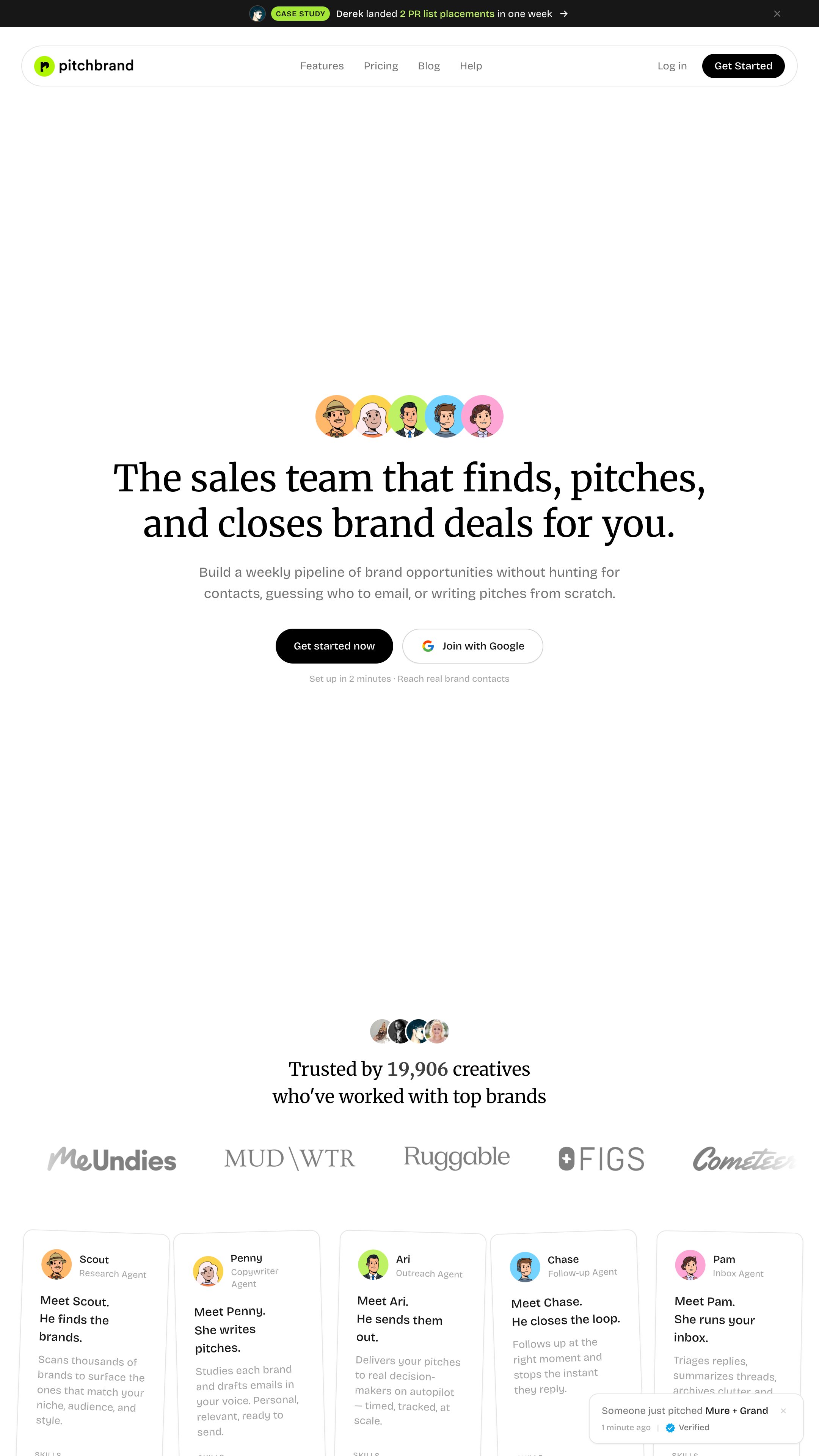
Best for: UGC creators, influencers, photographers, and anyone doing proactive brand outreach as their core income strategy.
PitchBrand is the only creator outreach tool in this list built specifically for content creators not B2B sales teams, not link-building agencies, not marketing managers.
That distinction matters more than it might seem.
The platform handles the entire outreach workflow: it discovers brands to pitch, finds the right decision-makers at those brands, generates AI-personalised pitch emails using your profile and the brand's data, sends automated follow-up sequences from your connected inbox, and surfaces replies so you can close deals.
The AI-generated personalisation is a particular standout. Rather than filling in generic variables, PitchBrand combines brand-specific data with your creative profile to produce emails that genuinely reference why you are a good fit for this specific brand, which is exactly what brand managers say separates the pitches they respond to from the ones they delete.
For creators who want a system that runs without constant manual input , PitchBrand is the natural home base.
2. GRIN Platform
Pros and Cons
Pros
-
Tailored for e-commerce brands' specific needs.
-
Simplifies product seeding and affiliate management.
Cons
-
Pricing details are not publicly available.
-
Few public reviews make user feedback sparse.
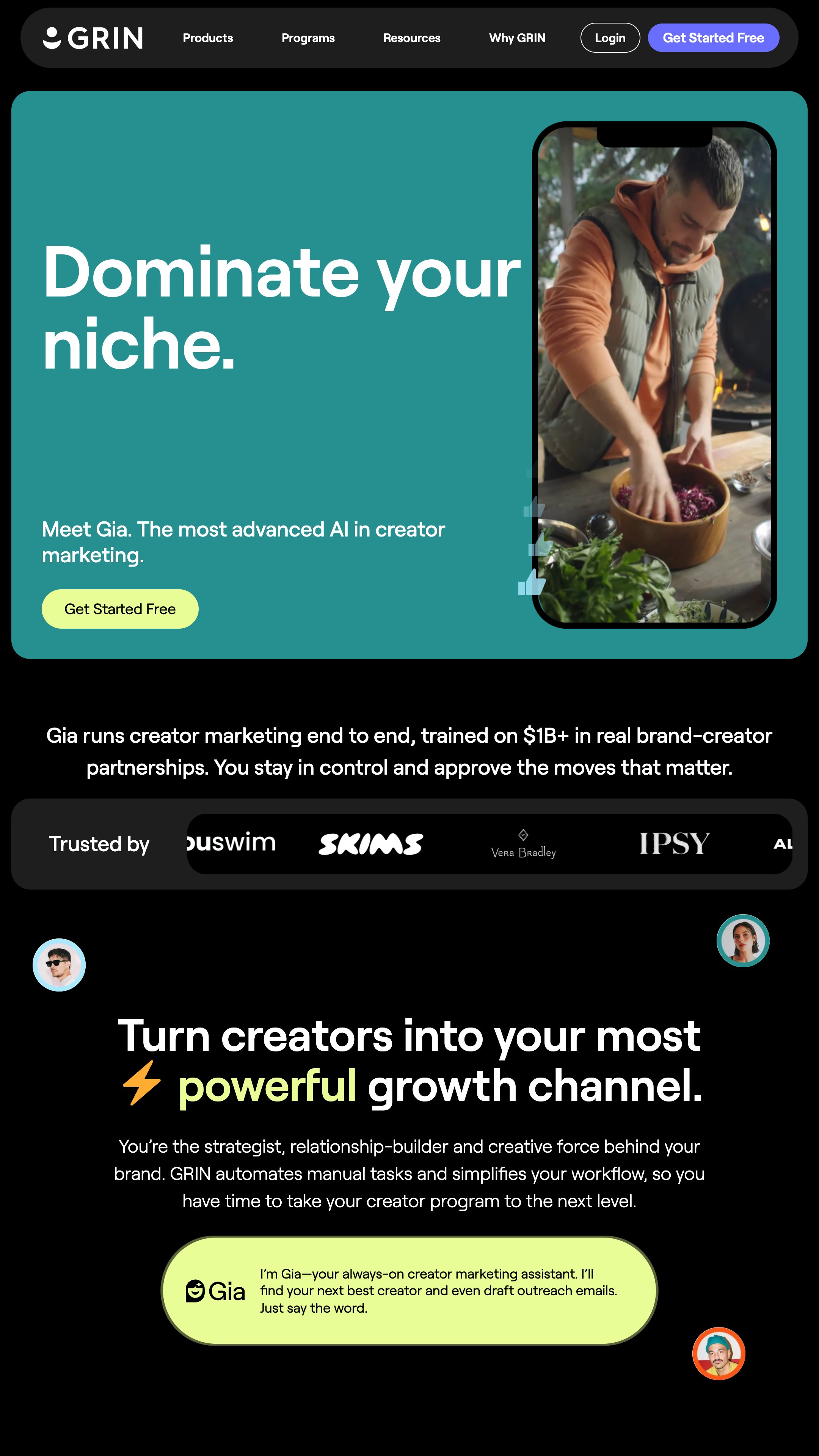
GRIN offers a comprehensive suite of tools to simplify influencer marketing, particularly for e-commerce brands. With its creator discovery feature, you can identify influencers that align with your brand's goals and initiate outreach directly within the platform.
Everything from product seeding to managing discount codes and affiliate links is streamlined, thanks to its seamless e-commerce integration.
Campaign management is another standout feature, providing a centralized hub to plan, execute, and analyze campaigns. GRIN also delivers detailed performance insights, such as sales tracking and ROI analytics, helping brands measure the effectiveness of their collaborations.
The platform operates on a custom pricing model, personalized to individual business needs. Some users may find the lack of transparent pricing or a free trial to be a drawback.
Additionally, the custom pricing structure means you'll need to invest time in obtaining quotes before understanding the full cost commitment.
With its e-commerce-first approach, GRIN serves as a valuable option for brands seeking a targeted solution for influencer marketing.
3. Modash Platform
Pros and Cons
Pros
-
Easy-to-use interface streamlines influencer campaigns.
-
Delivers precise influencer audience insights.
Cons
-
Bulk emailing options are limited.
-
Pricing can be high for small teams.
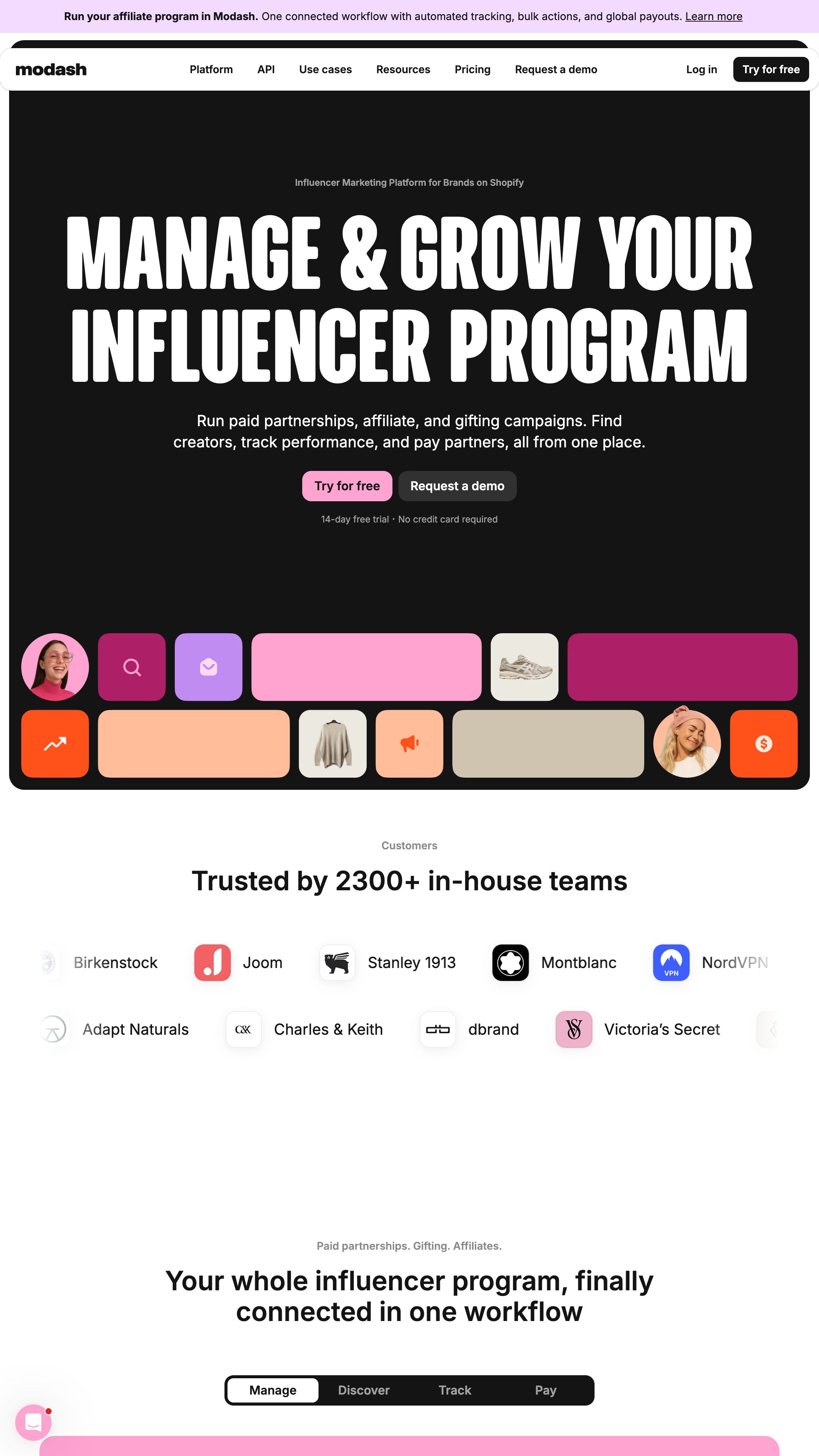
Modash is a versatile platform for discovering influencers and managing campaigns across Instagram, TikTok, and YouTube. Its database includes over 350 million creators, and advanced filtering options make it easy to identify influencers that align with specific audience demographics.
You can build contact lists within the platform, and for outreach management, export them to external tools.
The platform delivers robust discovery and data analysis features, which support brands looking for deep audience research and thorough influencer vetting.
The campaign management tools help organize your collaborations and track performance metrics, while the analytics features provide insights to help measure campaign effectiveness.
The platform focuses on discovery and data analysis rather than direct e-commerce integration, making it perfect for brands who want deep audience research and influencer vetting.
Modash operates on a custom pricing model that varies based on each client's specific needs and campaign requirements. Standard rates aren't published, but the platform provides demos to help you evaluate the features before committing to a personalized plan.
For those managing large-scale campaigns, Modash provides a centralized solution to simplify influencer marketing.
4. Aspire (Formerly AspireIQ)
Pros and Cons
Pros
-
Combines discovery, management, and analytics in one place.
-
Automates campaign tasks for efficiency.
Cons
-
Annual pricing and contracts are expensive.
-
Advanced tools require thorough onboarding.
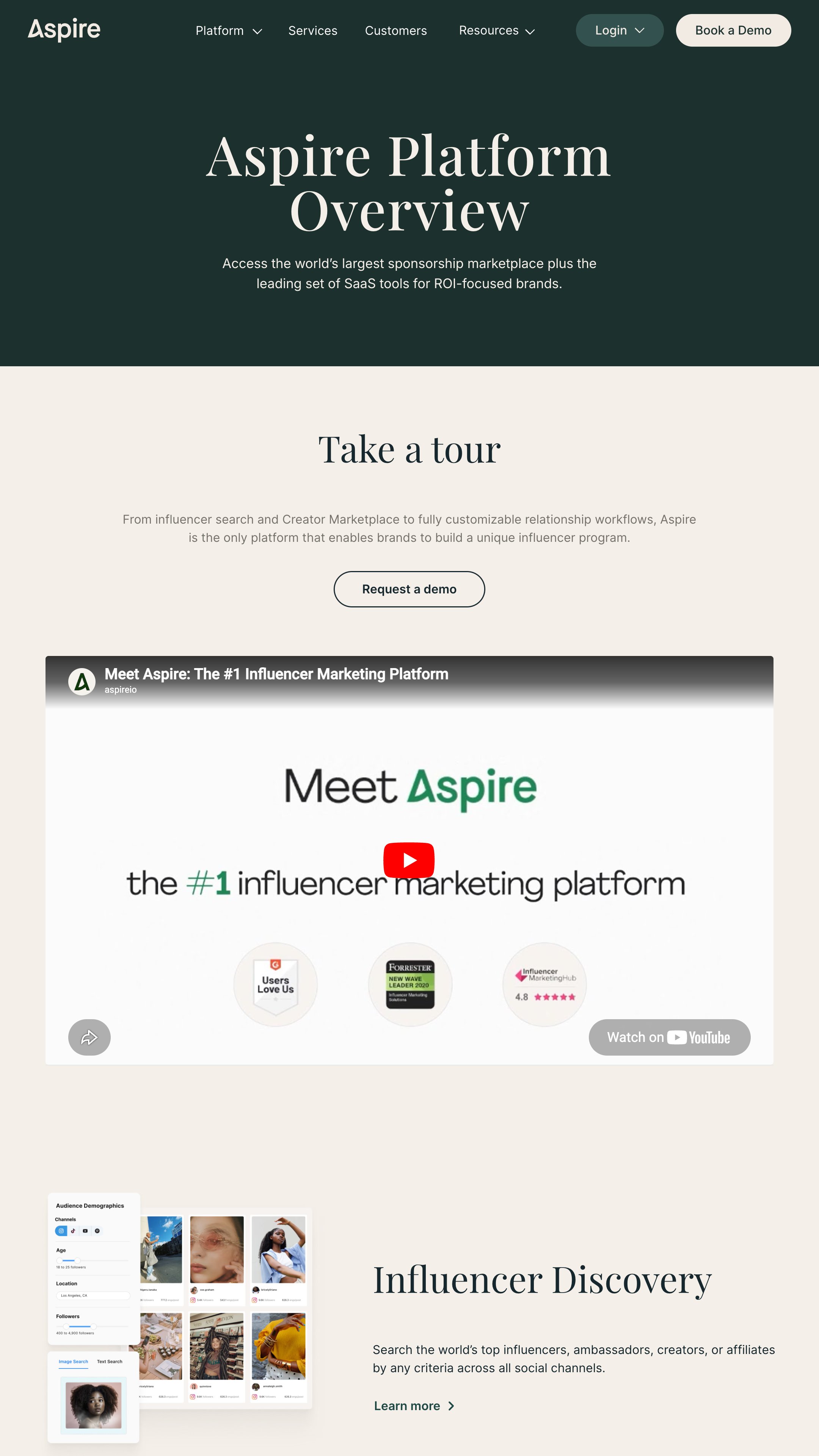
Aspire, formerly known as AspireIQ, is a feature-rich influencer marketing platform that connects brands with creators across multiple social media platforms like Instagram, TikTok, and YouTube. Its creator marketplace allows brands to post campaigns and receive applications directly from interested influencers, simplifying the connection process.
The platform also integrates tools for managing briefs, contracts, and content approvals, centralizing campaign workflows. For e-commerce brands, Aspire's Shopify integration provides additional functionality, such as tracking influencer-driven sales and connecting campaign performance to actual revenue.
Its analytics dashboards make it easy to measure performance metrics like engagement and ROI, offering actionable insights to refine campaigns.
Aspire operates on a custom pricing model that requires an annual commitment, with specific costs determined based on individual business needs and size. While it's comprehensive, some users might find the cost prohibitive, and the lack of a month-to-month option limits flexibility.
Additionally, the tools can feel complex for beginners, requiring time to master. Still, for larger teams with dedicated budgets, Aspire is a comprehensive solution.
5. Upfluence Platform
Pros and Cons
Pros
-
Huge influencer network across social channels.
-
Powerful search filters for targeted outreach.
Cons
-
Pricing is high for smaller businesses.
-
Feature-rich platform may overwhelm beginners.
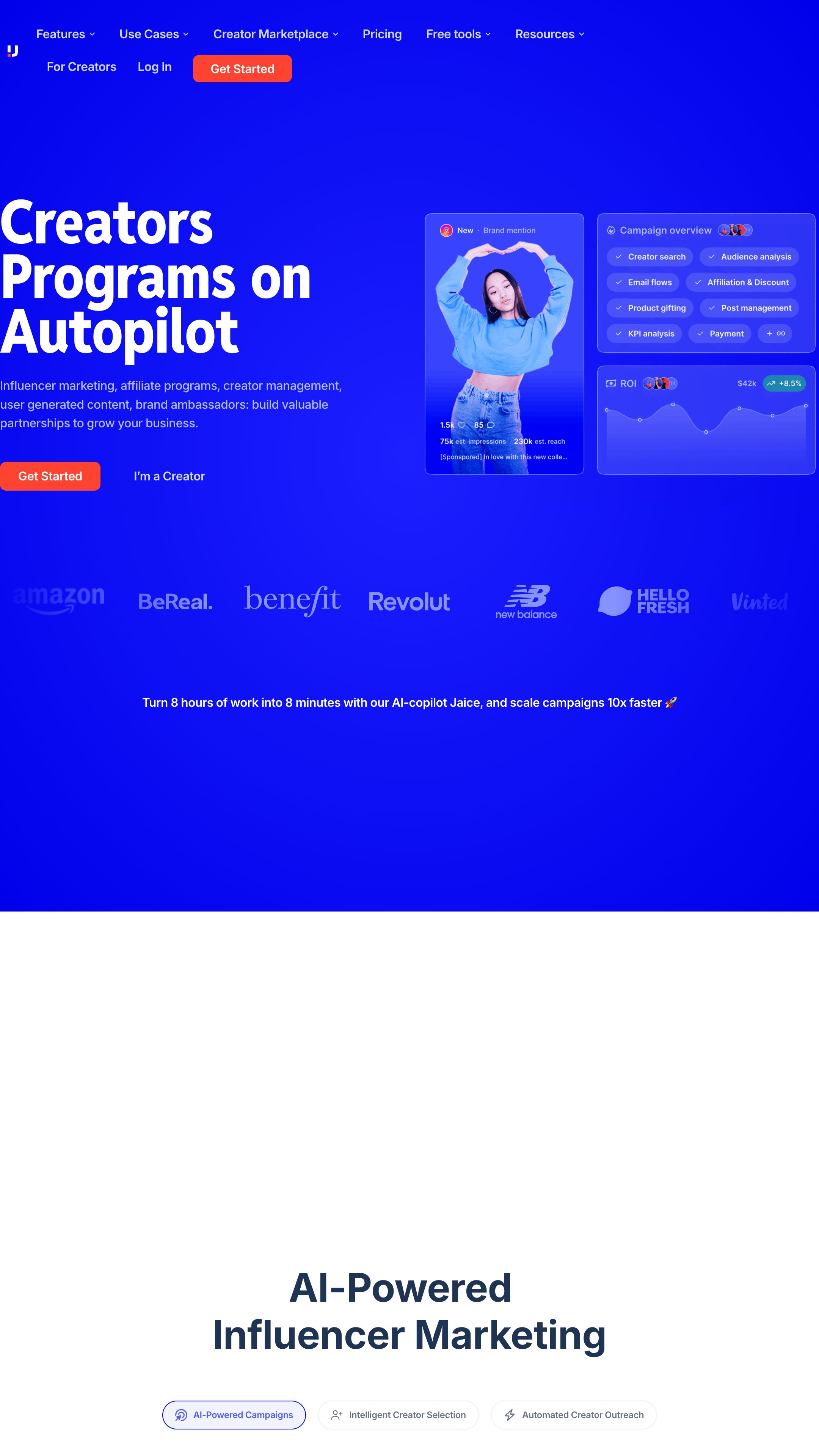
Upfluence is a comprehensive platform that helps brands discover, manage, and collaborate with influencers across multiple social platforms like Instagram, TikTok, and YouTube. With a database of over 3 million influencers, users can refine their search using AI-powered filters based on demographics, engagement, and more.
Its centralized dashboard makes campaign management seamless, offering tools for tracking performance, automating outreach, and managing contracts.
For e-commerce-focused campaigns, Upfluence integrates with platforms like Shopify and WooCommerce, allowing brands to track influencer-driven sales and simplify product gifting.
The analytics suite delivers real-time insights into metrics like views, clicks, and revenue attribution to help measure campaign ROI.
Upfluence uses custom pricing that is not publicly disclosed, and reports suggest costs may be significant for smaller creators. Additionally, the platform's extensive features can create a steep learning curve for beginners.
Despite these challenges, Upfluence is a comprehensive option for those seeking an all-in-one solution to scale their campaigns and measure ROI effectively.
6. CreatorIQ Platform
Pros and Cons
Pros
-
Advanced analytics provide deep campaign insights.
-
Integrates easily with social and marketing tools.
Cons
-
High annual cost may deter smaller brands.
-
Complex interface requires significant training.
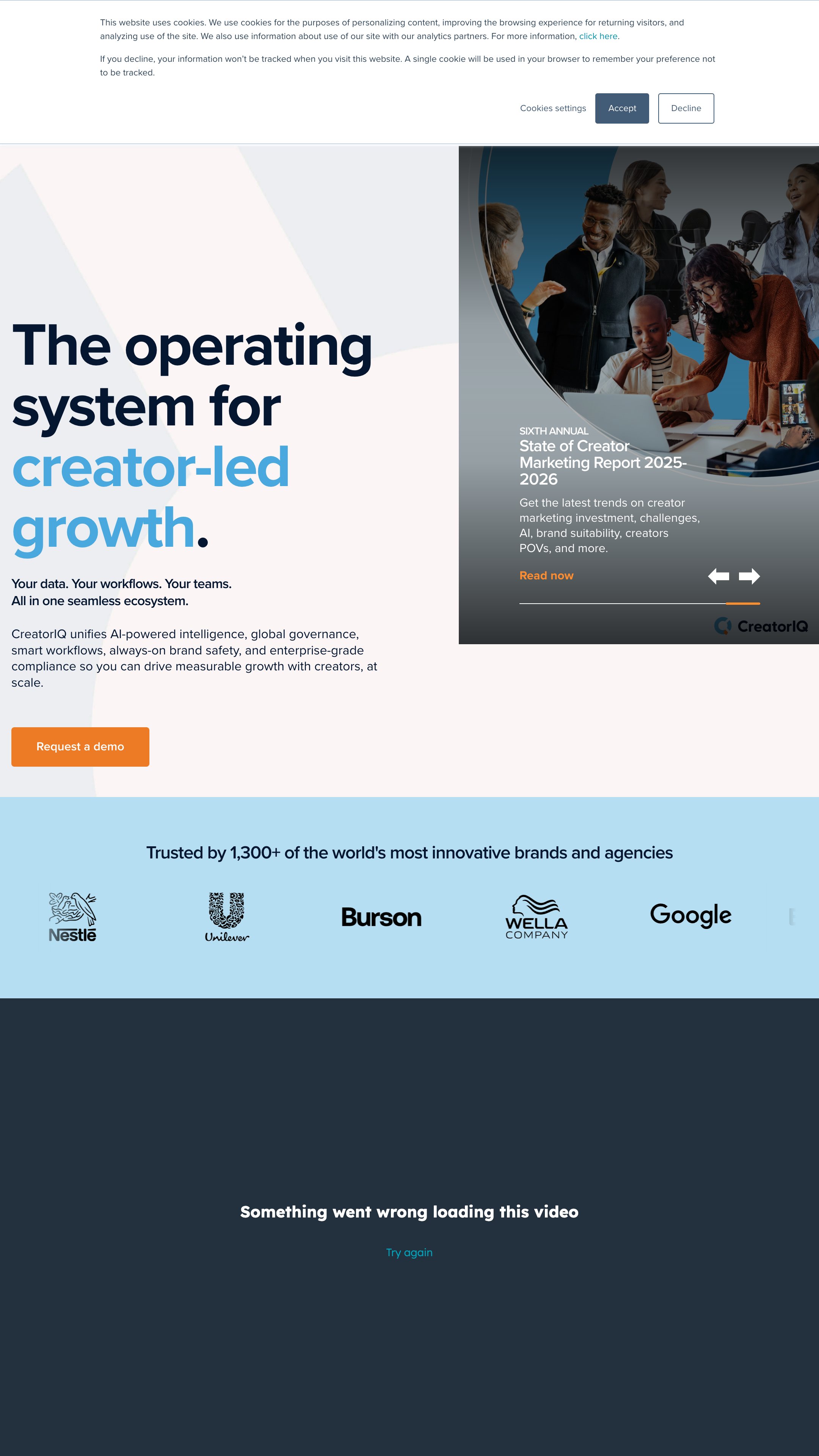
CreatorIQ serves as an enterprise-grade solution for influencer marketing, offering tools that cater to large-scale campaigns. Its AI-powered influencer discovery covers around 150 million creator profiles, helping users pinpoint creators based on audience demographics, engagement, and content type.
The platform also centralizes campaign workflows through its Influencer Relationship Management (IRM) system, which tracks interactions and facilitates communication.
From campaign management to detailed analytics, CreatorIQ provides everything needed to monitor progress, measure ROI, and generate custom reports. Features like product seeding logistics and global payment capabilities streamline operations, while compliance tools ensure data privacy and proper usage rights for UGC.
However, CreatorIQ uses custom pricing that typically starts around $36,000 annually, putting it out of reach for smaller teams.
Some users report a steep learning curve due to its feature-heavy design, which may require dedicated training. Despite these challenges, its advanced capabilities make it a strong choice for established brands or agencies managing complex campaigns.
7. Sprout Social Influencer Marketing (Formerly Tagger)
Pros and Cons
Pros
-
Intuitive interface makes campaign management simple.
-
Strong analytics offer valuable performance data.
Cons
-
Entry pricing may be steep for new users.
-
Lower plans limit the number of social profiles.
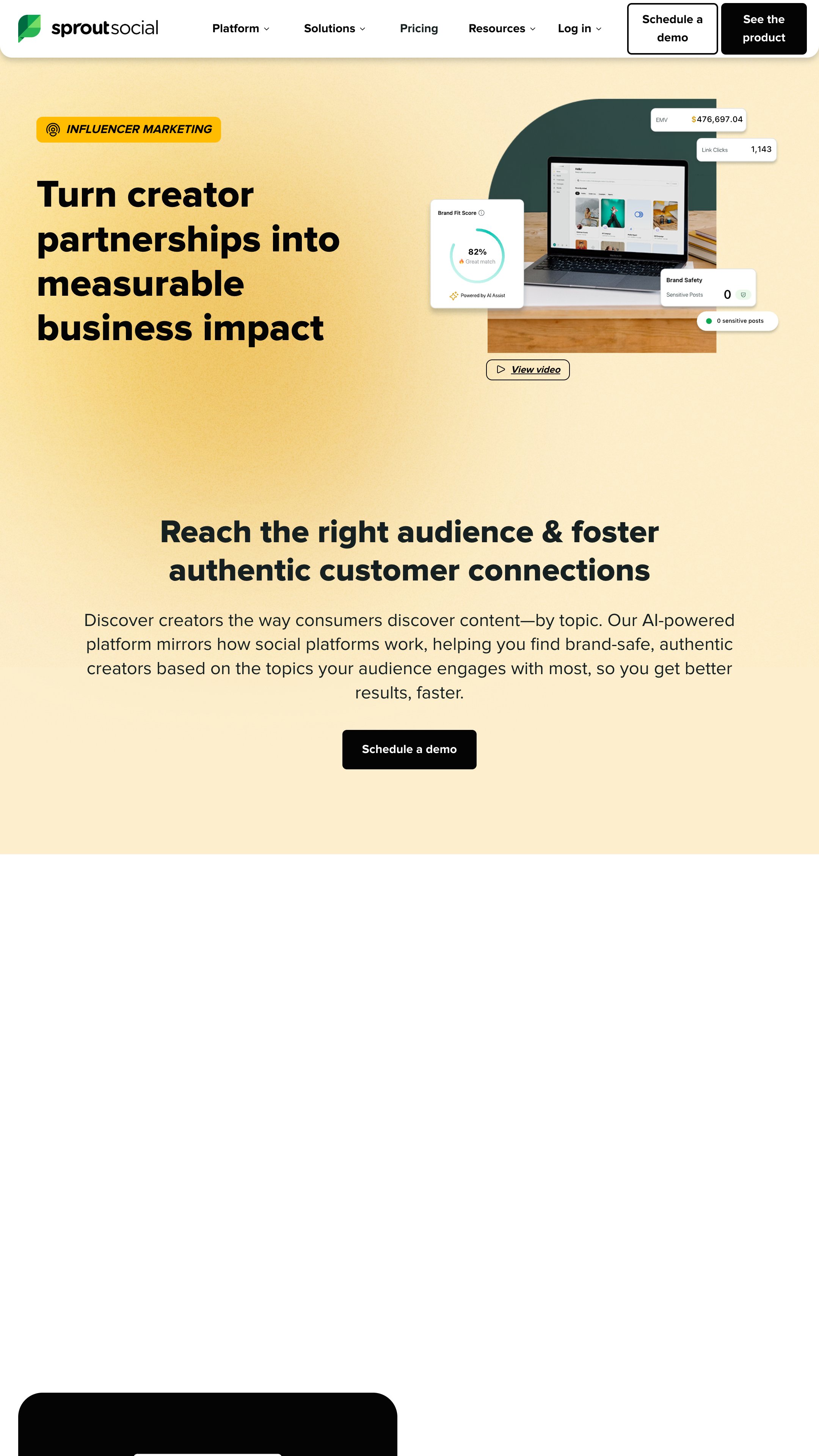
Sprout Social Influencer Marketing is an all-in-one platform that handles influencer campaigns from start to finish. Its influencer discovery tool helps brands find creators based on niche topics, ensuring alignment with campaign goals.
The platform simplifies campaign workflows with centralized features for outreach and content approvals. For contracts and payments, separate tools are required.
Analytics is another strong point, with customizable reports that provide detailed insights into campaign performance and engagement metrics.
Plus, integrations with tools like HubSpot and Canva help streamline various workflows and connect with existing marketing stacks.
The platform operates on custom pricing, with plans typically ranging from hundreds to thousands per month depending on your needs and team size. The cost might be a hurdle for smaller teams. Still, for businesses ready to invest in a comprehensive solution, it's a reliable option.
8. Meltwater Klear
Pros and Cons
Pros
-
Large influencer database with robust analytics.
-
Integrates with multiple social media platforms.
Cons
-
Pricing transparency is lacking.
-
New users may face a steep learning curve.
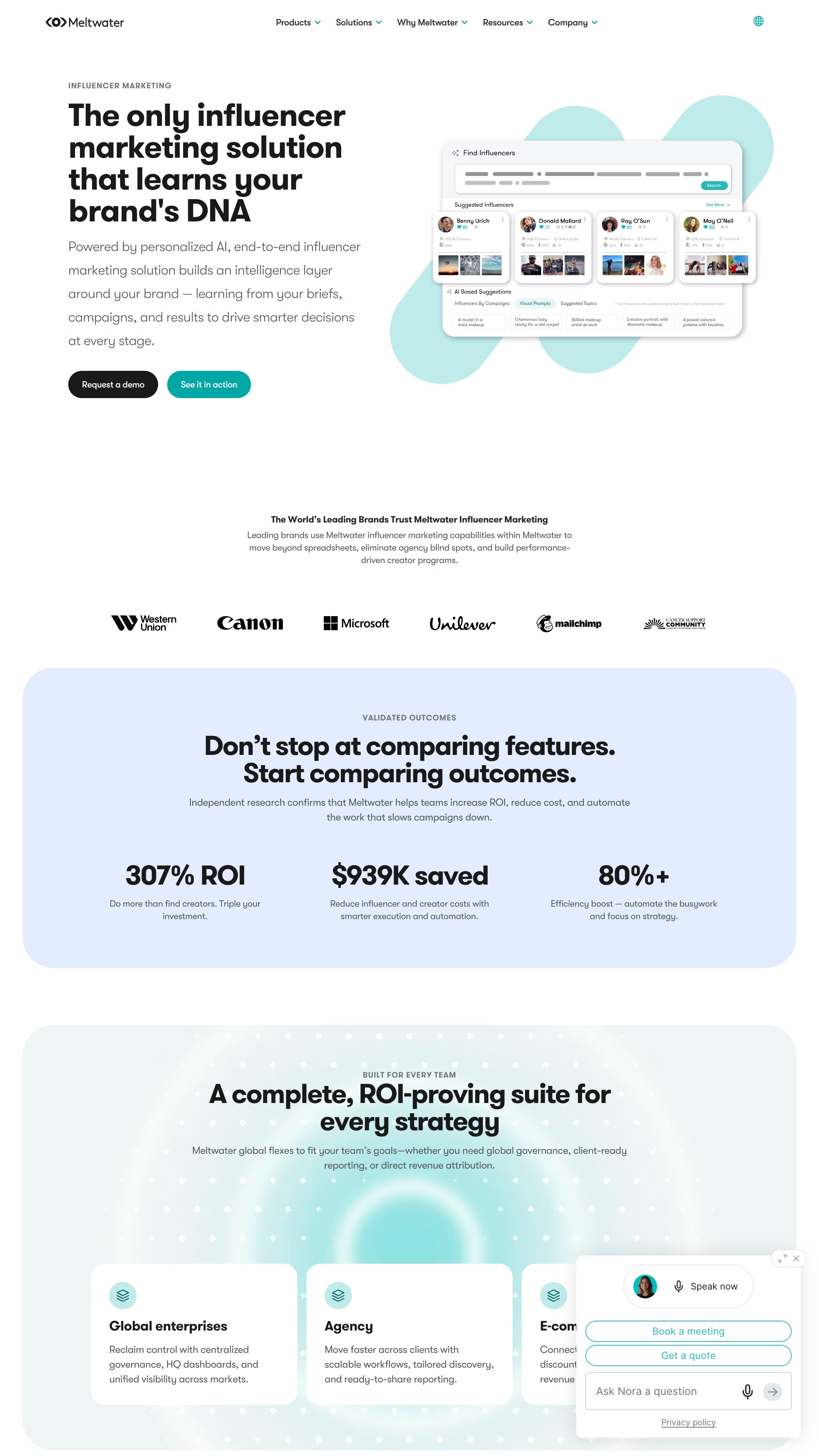
Meltwater Klear is a data-driven influencer marketing platform that helps brands discover, collaborate with, and measure the impact of their creator partnerships. With access to over 900 million influencer profiles, users can filter creators by audience demographics, engagement rates, and niche relevance, making it easier to find the right fit for campaigns.
The platform also simplifies campaign management, allowing users to oversee multiple campaigns, track performance, and ensure alignment with brand objectives, all in one place.
Detailed analytics, including True Reach and Estimated Media Value (EMV), provide actionable insights to assess ROI and optimize strategies. Integration with social platforms ensures seamless content tracking across channels.
Klear operates on a flexible pricing model that isn't publicly disclosed, with costs varying based on company size and specific feature requirements. However, the lack of transparent pricing can make upfront budgeting tricky.
Despite this, its comprehensive data and reporting tools make it a solid choice for brands managing influencer campaigns at scale.
9. Traackr Platform
Pros and Cons
Pros
-
In-depth data and analytics for campaign evaluation.
-
CRM features support long-term influencer relations.
Cons
-
Annual pricing starts high, limiting accessibility.
-
Extensive features may require significant onboarding.
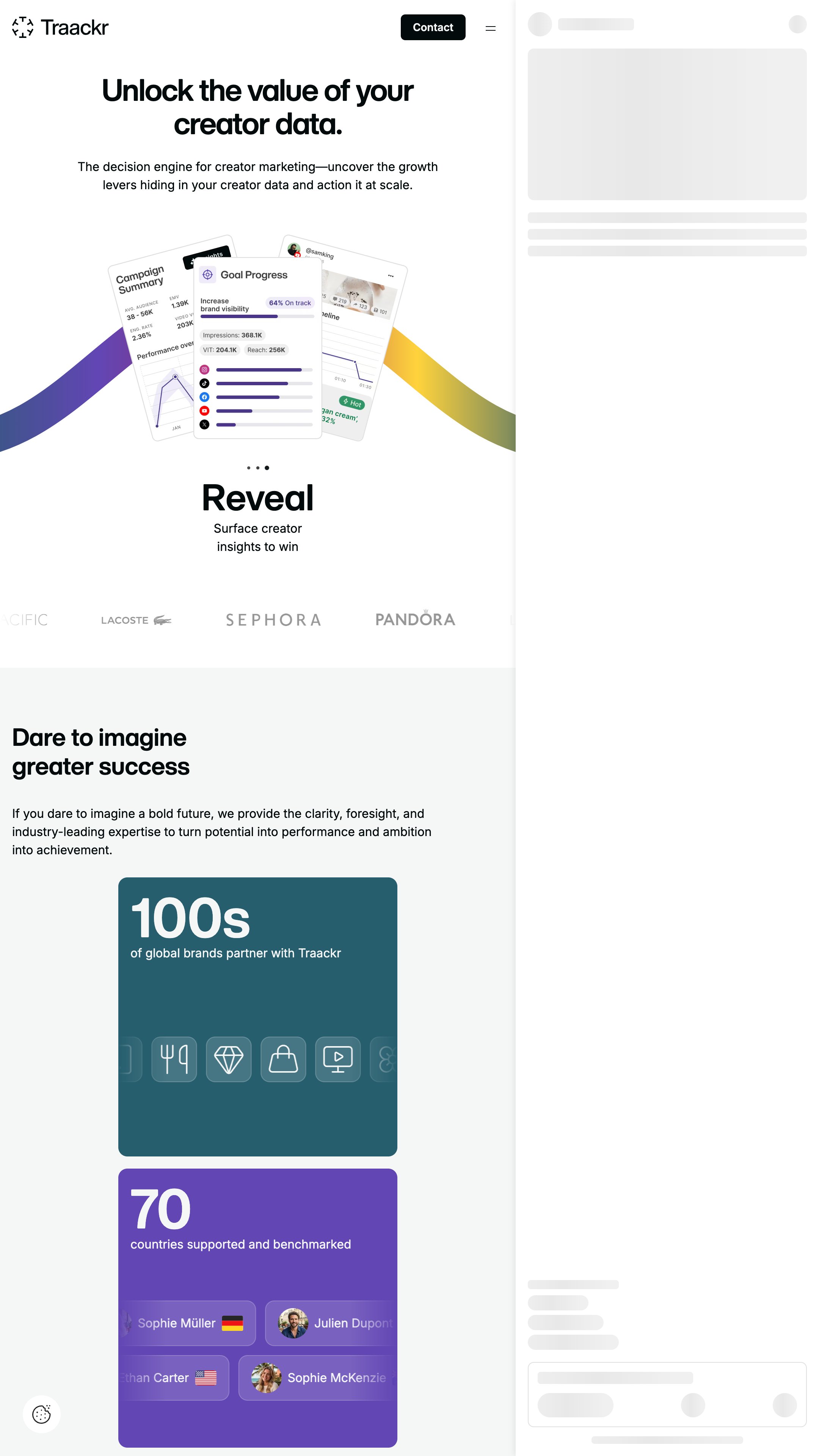
Traackr is a versatile platform built for influencer marketing professionals managing complex campaigns. Its database of 6 million creators spans platforms like Instagram, YouTube, and TikTok, making it easy to find and vet influencers based on specific criteria such as audience demographics, content niche, and even brand affinities.
For brands seeking precision, the platform's advanced audience analysis tools provide psychographic insights to ensure relevance and engagement.
Campaign workflows are streamlined with centralized tools for briefing, approvals, and performance tracking, while its CRM-like functionality helps develop long-term influencer relationships.
Traackr also includes compliance tools to maintain brand safety and align campaigns with regulatory standards.
Pricing is customized based on specific business needs, with costs typically starting around $25,000 annually depending on team size and required features.
While its comprehensive analytics and global reach are standout strengths, the cost and learning curve may deter smaller teams, for those managing multi-market programs, however, it's a powerful solution.
10. Captiv8 Platform
Pros and Cons
Pros
-
Centralizes influencer management and collaboration.
-
Easy-to-use interface streamlines creator discovery.
Cons
-
Premium pricing excludes smaller businesses.
-
New users may initially find the features complex.
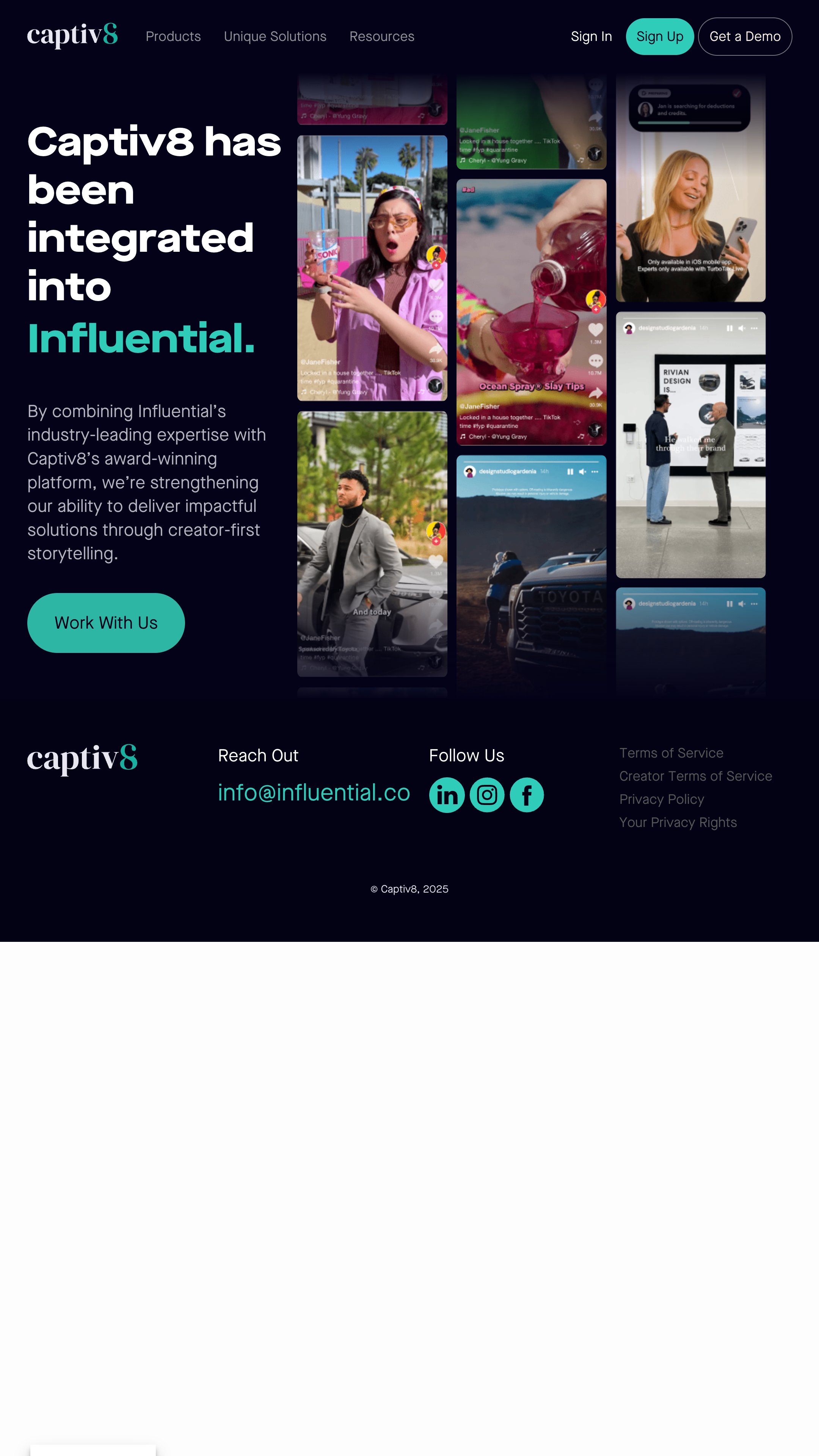
Captiv8 is a feature-rich platform built for brands and agencies managing influencer campaigns at scale. Its influencer discovery tool provides access to over 50 million creator profiles, allowing you to filter by audience demographics, interests, and even brand affinity.
With creator analytics, you can track performance metrics like engagement rates and channel trends, ensuring informed decision-making.
Campaign management tools simplify the process by centralizing outreach, post tracking, and performance monitoring. The platform also includes a reporting suite with customizable dashboards, making it easy to showcase ROI to stakeholders.
For added security, Captiv8 offers brand safety features to flag risky content and detect fake followers.
The high price point and learning curve may limit accessibility for smaller creators or teams, while its comprehensive functionality is ideal for large-scale campaigns. Pricing is available through custom quotes, with additional onboarding fees and optional modules at extra costs.
How to Build Your Creator Outreach System Step by Step
A creator outreach tool is only as powerful as the system it sits inside. Here's how to build one.
Step 1: Define Your Target Brand Profile
Before you open any outreach tool, get clear on who you're pitching. Define:
-
Brand size (startup, mid-market, enterprise)
-
Industry/niche (beauty, food, tech, fitness, etc.)
-
Budget signals (do they already work with creators? Do they run paid ads?)
-
Geographic market
The more specific your target profile, the more relevant your pitches will be and the higher your reply rate.
Not sure which brands to target? Start with our curated list of 50+ brands to collab with as a prospecting foundation.
Step 2: Build Your Outreach Assets
Your creator outreach tool sends the email. But the email needs to link to something compelling. Before you start any outreach campaign, make sure you have:
-
A media kit that brands won't ignore: see our guide on how to build a media kit that brands can't ignore
-
A strong creator bio: 15 UGC creator bio examples to attract deals shows you exactly what to write
-
A portfolio showcasing relevant work in your niche
-
Proven pitch templates: our UGC pitch templates are a solid starting point before you customise them for your outreach tool
Step 3: Set Up Your Outreach Sequence
A three-email sequence is the professional standard for brand outreach:
Email 1 (Day 0): The Pitch Personalised, concise (under 150 words), with a clear value proposition and a single call to action. Reference something specific about the brand. Include a link to your portfolio or media kit. No rate card in the first email.
Email 2 (Day 5–7): The Value Add Don't just say "following up." Add something new: a content idea, a relevant piece of content you created, a campaign observation. Give them a reason to reply that they didn't have before. Our guide on how to follow up after pitching a brand covers the exact copy to use.
Email 3 (Day 12–14): The Close Brief and honest. "I know your inbox is busy, closing the loop here. If the timing is better later in the year, I'd love to reconnect." This framing generates a surprising number of replies from brands who were interested but simply buried.
After three emails with no response, move on. You can re-approach the same brand in 90 days with a fresh angle.
Step 4: Track Everything
A creator outreach tool without data review is just automation for its own sake. Weekly, check your:
-
Open rate: If below 30%, your subject line needs work. See our guide to subject lines that get brand deals opened.
-
Reply rate: If below 5%, your email body or targeting needs refining.
-
Conversion rate: How many replies become actual deals? If this is low, your pitch-to-negotiation skills may need attention.
Step 5: Continuously Refine
Treat every batch of pitches as a test. A/B test your subject lines. Try different opening lines. Pitch different segments of brands. Over 60–90 days of consistent outreach, you'll develop a data-backed understanding of exactly what works for your niche, your audience, and your style.